Carlotta Corpron
Carlotta Corpron
Carlotta Corpron
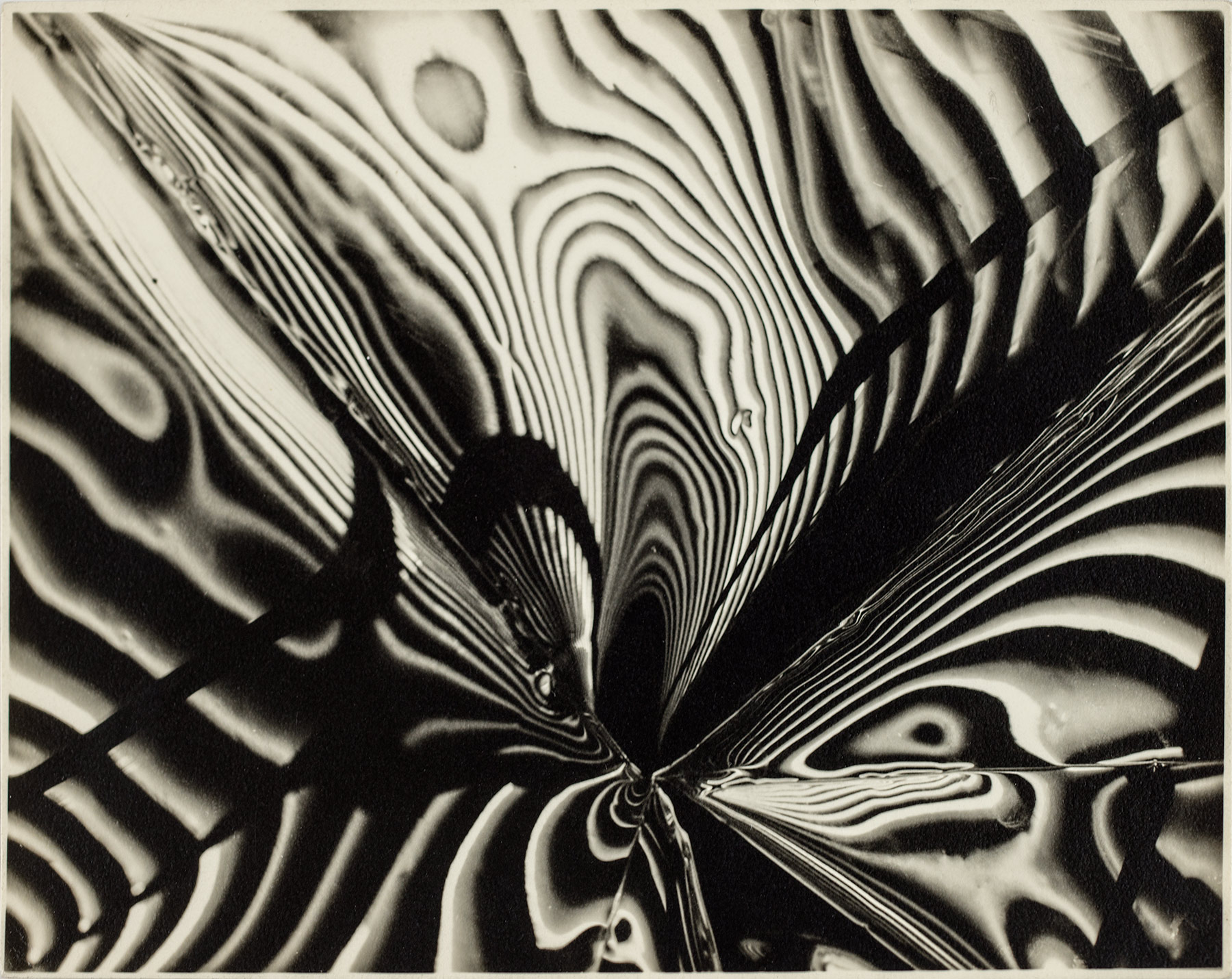
{{gallery}}Carlotta Corpron’s groundbreaking light experiments pushed photography in new directions. Her skill as a designer, her nuanced sensitivity as an educator and her inquisitive independence drove her exploration of new ways to use the medium as an expressive tool. Corpron’s photographic work of the early 1940’s anticipated what was to become one of the most important movements in 20th century art – Abstract Expressionism.
Corpron first started using the camera to study natural forms and patterns but soon set on a path to freeing the photographic image from its roots recording and reproducing reality. Her bold new direction of using the medium for abstraction flew in the face of established schools of photography: soft focus pictorialism, the hard image of f64 and social document. Alfred Stieglitz whom she visited in New York in 1945 had planned to show her work but he died the next year before an exhibition could be mounted.
Corpron’s later work was informed by the philosophy of the Bauhaus and she was acknowledged by two of its leading members who had emigrated to the US. László Moholy-Nagy gave several workshops she organized in Texas and she received encouragement from György Kepes, department chair at MIT. Corpron was included in Steichen’s seminal 1951 MOMA exhibition Abstraction in Photography and was the subject of a solo show at the Art institute of Chicago in 1953.
But Corpron’s trajectory was so radical and divergent from the mainstream that it wasn’t until the late 1970’s, after retirement as an art and design professor at Texas Women’s University, that Corpron began to receive recognition. This exhibition celebrates the powerful body of work she produced and her fiercely independent eye.[/vc_column_text]